

What Is the Best Packaging for Sushi Takeout?
Last Updated: November 10, 2026
Quick Summary
Sushi takeout packaging should match the item: shallow trays with low walls for nigiri, compartments for maki and cut rolls, and shallow leak-resistant trays for sashimi. Keep sauces separate from the rolls and choose food-grade containers. Packaging supports cold handling but cannot chill food, so temperature control still matters.
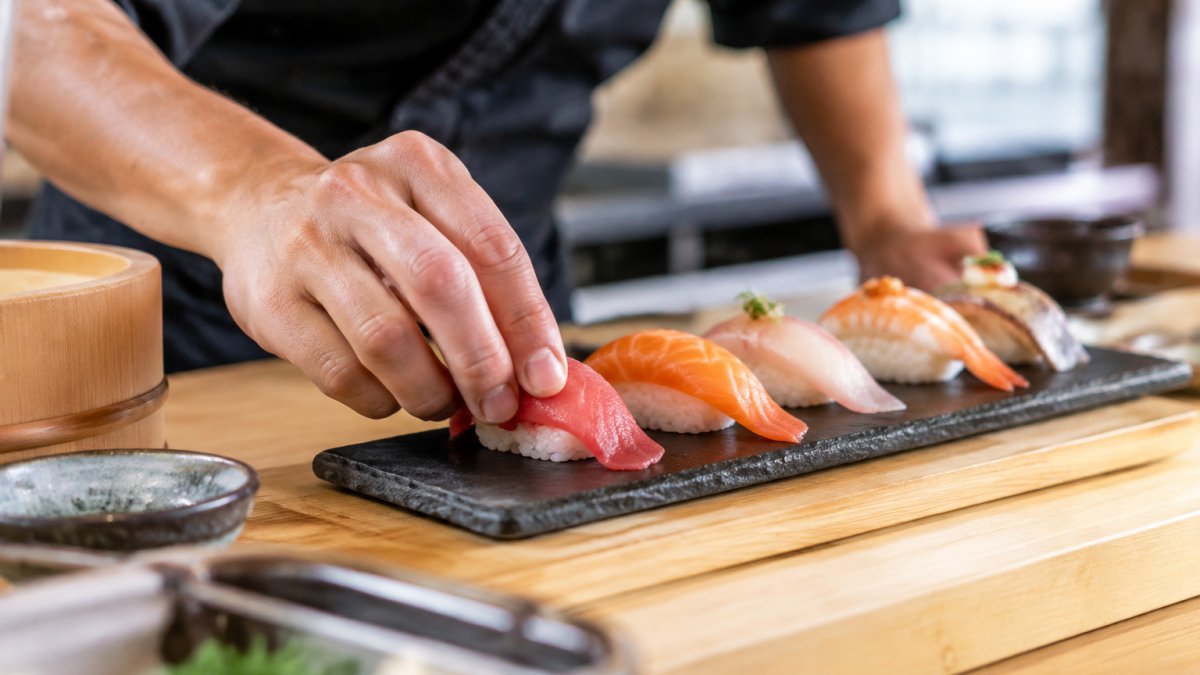
Nigiri works best in shallow trays with low walls and a flat floor.
Compartments stop maki and cut rolls from touching and keep nori off rice.
Sashimi needs a shallow, leak-resistant tray with a tight seal.
Keep sauces separate from rolls, since a single leak softens crisp nori.
Confirm food-grade certification before adopting a new tray, per the FDA Food Code.
Tired of takeout sushi arriving warm and falling apart?
Kato Sabi Sushi Bar packs every order with fresh ingredients and careful handling for pickup and delivery.
Table of Contents
Sushi Containers for Takeout: Matching the Box to the Order
Sushi takeout packaging is the set of containers, trays, and closures that protect raw fish, rice, and sauces from kitchen to customer. Matching the box to the order matters, because a loose roll in the wrong tray arrives looking nothing like it left the counter.

Nigiri. Shallow trays with low walls and a flat floor help pieces stay in place without being pressed down. A deep box lets pieces tumble, so a fitted lid that clears the topping is safer.
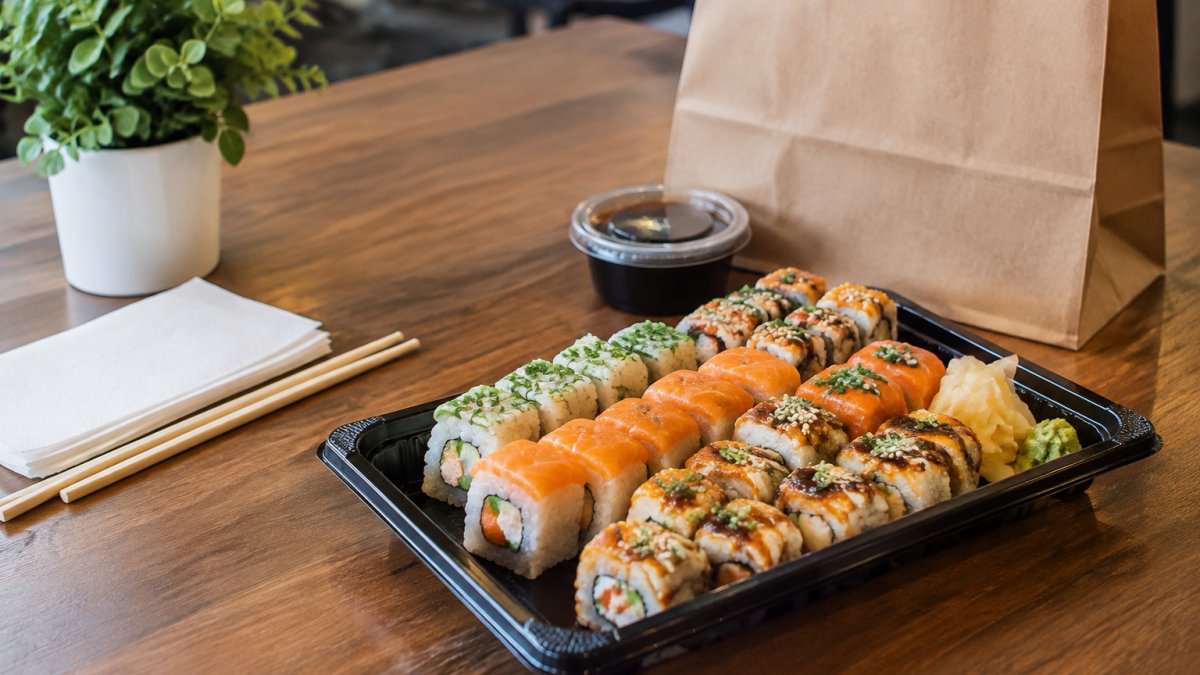
Maki and cut rolls. Compartments are the workhorse here, stopping rolls from rolling into each other and keeping nori off rice. Size compartments so pieces sit upright. Rigid paperboard holds shape better than thin plastic.
Sashimi. Raw fish releases moisture, so a shallow, leak-resistant tray with a tight seal helps contain it. Keep sashimi separate from rice and nori in mixed orders.
Hand rolls. These are the most fragile item because the nori cone is exposed, so they benefit from careful handling.
Sauces and accompaniments. A single leak turns crisp nori soft, so keeping sauces separate from the rolls helps protect texture.
Mixed platters and family trays. A larger box with separate sections lets a combo meal travel without sauces touching the rice. For family trays, choose a base rigid enough to carry the weight without flexing, and a lid that clears the tallest item. The FDA Food Code on food-contact surfaces sets the baseline for any material that touches food directly, so confirm food-grade certification before adopting a new tray.
The trade-off: more compartments mean more assembly time and storage space.
The right container depends on the item, and the article's guidance by item type can be summarised as follows.
Item | Best container | Key point |
Nigiri | Shallow tray, low walls | Pieces stay put without being pressed |
Maki and cut rolls | Compartments | Stops rolls touching and keeps nori off rice |
Sashimi | Shallow, leak-resistant tray | Contains moisture from raw fish |
Hand rolls | Careful handling | Exposed nori cone is most fragile |
Sauces | Kept separate | Prevents nori from going soft |
Mixed platters | Larger box with sections | Sauces stay away from rice |
Sushi Packaging for Delivery: Protection From Kitchen to Door
Delivery adds distance, vibration, and time, so packaging for delivery needs to hold food still and keep lids tight.
How to Keep Sushi Fresh for Takeout
Keeping sushi fresh for takeout comes down to temperature and moisture control, not fancy containers. Packaging can slow heat transfer and block air, but it cannot chill food, so handling and the container work together. The FDA Food Code time and temperature guidance is the baseline for how long perishable food can sit before it becomes a risk; packaging choices should support that timeline, not substitute for it.
Temperature control. Chilling the order before it leaves and keeping it cold in transit is important. A tight lid limits air exchange but does not replace refrigeration.
Moisture control. Rice dries when air gets in; nori softens when moisture is trapped.
Separating components. Keeping sauces separate until the customer opens the box helps preserve texture.
Watch out: packing hot items beside cold sushi in one bag creates condensation that ruins texture fast.
Compostable Sushi Containers: What Works and What to Check
Compostable sushi containers depend on their closure as much as their material, so check whether the material needs commercial composting.
Ordering takeout should never mean settling for soggy rice or a leaked sauce cup. At Kato Sabi Sushi Bar, Chef Martin Talavera's training alongside master chefs from Japan shapes how we pack every order, from fresh ingredients to reasonable prices across our McAllen, Pharr, and Edinburg locations. Get started with Kato Sabi Sushi Bar and taste the difference fresh, carefully packed sushi makes.
Frequently Asked Questions
What is the best container for sushi takeout?
Rigid food-grade trays with tight-fitting lids work best. Avoid flimsy clamshells that crush rolls in transit.
How do you keep sushi fresh during delivery?
Keep sushi cool from the moment it is packed. Keep sushi cool from the moment it is packed, and keep it away from hot items during transit. Ask for pickup or delivery windows that match when you plan to eat.
Are compostable sushi containers suitable for takeout?
Compostable sushi containers made from paperboard, bagasse, or plant-based materials can work for takeout, but check two things: whether the material handles moisture and whether it is accepted by a commercial composting facility. Ask the restaurant how the container should be disposed of so the sustainability claim holds up.

Comments