

Is Sushi Good for Family Dinner? A Parent's Guide
Last Updated: November 12, 2026
Quick Summary
Yes, is sushi good for family dinner has an encouraging answer, provided you order the right rolls for your kids and know which safety rules matter. Sushi lets each person build a plate they actually want, so pick cooked rolls and mild flavors for younger eaters and keep raw fish for adults and older kids.
The best sushi for kids is cooked sushi such as California rolls, cooked shrimp, tempura rolls, and cucumber or avocado maki.
Health agencies recommend young children, pregnant women, and people with weakened immune systems avoid raw fish entirely.
Build family orders around FDA Best Choices like salmon, shrimp, pollock, tilapia, cod, and crab, low in mercury and safe two to three times a week.
Raw fish left at room temperature for more than two hours should be discarded, and that window shrinks in a warm car.
Order shared platters instead of individual entrées, since one large platter feeds more people per dollar.
Is sushi a good pick for family dinner?
Kato Sabi Sushi Bar serves chef-prepared rolls for kids and adults across the RGV.
Table of Contents
Is Sushi Good for Family Dinner? The Short Answer
Yes, the question of is sushi good for family dinner has an encouraging answer, provided you order the right rolls for your kids and know which safety rules matter. The answer comes down to selection rather than the cuisine itself.
The honest trade-off: sushi is only as good for your family as the choices you make at the table.
The Pros and Cons of Sushi Night
Pros | Cons |
Kids choose their own rolls, so picky eaters stay happy | Raw fish carries food safety risks for young children |
Lean protein, healthy fats and rice fit a balanced diet | Some fish run higher in mercury than others |
Bite-sized pieces suit small appetites | High-end rolls can strain a weeknight budget |
Shared platters make dinner feel interactive | Takeout quality depends heavily on how it's packed |
The pros win out for most families if you plan around the cons. Treat a sushi platter for family dinner like a build-your-own meal: rice, a mix of cooked and raw options, and a few familiar flavors for cautious eaters.
The Best Sushi for Kids: Cooked Rolls and Mild Flavors
The best sushi for kids is cooked sushi, full stop.

A common mistake is ordering an ambitious specialty roll for a child who has never had sushi. Start plain with cooked shrimp, avocado, cucumber, and vinegared rice, then add complexity once your kid clears the first plate.
Age-Appropriate Sushi Progression
There's no official age at which raw fish becomes safe for a child, so use judgment and check with your pediatrician. A practical progression many families follow:
Ages 2-5: Cooked rolls only, cut into small pieces, no wasabi.
Ages 6-9: Cooked rolls plus cooked shrimp and mild maki; introduce soy sauce in small amounts.
Ages 10+: Small tastes of raw fish from a trusted source, if your child is interested and your doctor agrees.
Food Safety Basics: Raw Fish, Mercury, and Kids
Food safety is the one part of sushi night you cannot improvise.
Mercury is the second concern. Large predatory fish like tuna and swordfish accumulate more mercury than salmon or shrimp, so keep those choices occasional for kids and lean on lower-mercury options for regular family dinners (the FDA). If you want the current guidance, the FDA advice on mercury in fish breaks it down by species and audience.
Freshness matters just as much, since nori, vinegared rice, and raw fish degrade quickly.
Watch out: raw fish left at room temperature for more than two hours should be discarded, and that window shrinks in a warm car. If your delivery arrives warm, don't gamble with it.
A Practical Mercury Guide for Families
The FDA groups fish into "Best Choices," "Good Choices," and "Choices to Avoid" based on mercury levels. Build family orders around Best Choices: salmon, shrimp, pollock, tilapia, cod, and crab, low in mercury and safe for kids two to three times a week.
A common pattern is treating tuna rolls as the default kid-friendly option because they look plain, but tuna varies widely by species. Albacore (white tuna) and bigeye carry more mercury than skipjack (light tuna).
Raw Fish and Children: What the Guidance Actually Says
The FDA and CDC advise that young children, pregnant women, and immunocompromised people avoid raw fish because their immune systems are less equipped to fight food-borne illness. There is no official age at which raw fish becomes safe, so use judgment and check with your pediatrician. A practical progression many families follow:
Ages 2-5: Cooked rolls only, cut into small pieces, no wasabi.
Ages 6-9: Cooked rolls plus cooked shrimp and mild maki; introduce soy sauce in small amounts.
Ages 10+: Small tastes of raw fish from a trusted source, if your child is interested and your doctor agrees.
Watch out: "sushi-grade" is a marketing term, not a regulatory standard. It signals the fish was frozen to a specific temperature to kill parasites, but it does not guarantee freshness or handling safety. Ask how the fish was sourced and how long it has been out.
Cross-Contamination at Home
If you make sushi at home, keep raw fish and cooked ingredients separate. Use one cutting board for raw fish and another for vegetables and cooked items, and wash hands and tools with hot soapy water between steps. Store raw fish in the coldest part of your refrigerator and use it within a day. Assemble cooked rolls for kids last, after the raw fish is put away.
When to Skip Sushi Entirely
Skip sushi night if anyone at the table is sick, immunocompromised, or pregnant and craving raw fish. Also skip it if you cannot confirm how the fish was stored or how long the platter has been sitting out. A cooked-only order is always the safer fallback, and most restaurants will accommodate it.
How to Order Fresh Sushi for Pickup (and Delivery That Holds Up)
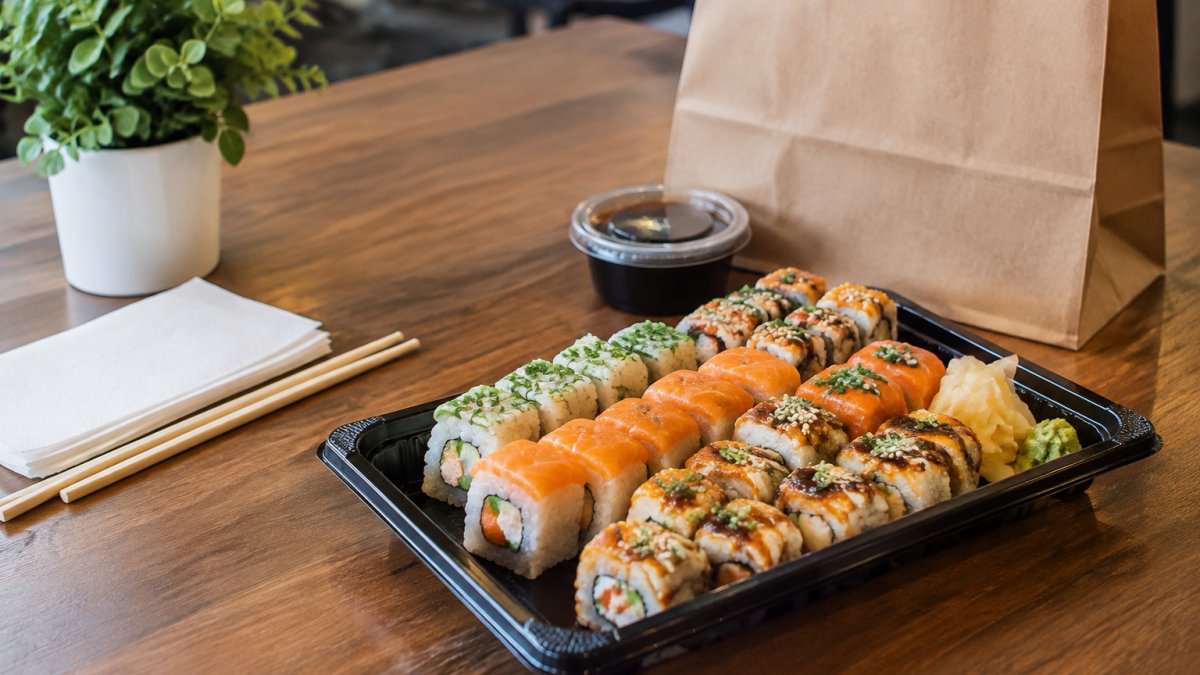
Ordering fresh sushi for pickup is straightforward if you plan the timing. Place your order close to when you'll eat, pick it up promptly, and don't let it sit in the car.
Delivery is harder. Sushi travels poorly when packed carelessly: rolls fall apart, rice dries out, and cold items warm up. Ask how a restaurant packs and transports orders before you choose delivery.
Watch out: raw fish left at room temperature for more than two hours should be discarded, and that window shrinks in a warm car. If your delivery arrives warm, don't gamble with it.
Building a Sushi Platter for Family Dinner on a Budget
A budget-friendly family sushi night comes down to ordering shared platters instead of individual entrées. One large platter feeds more people per dollar than a stack of separate rolls, and everyone can try a few things without committing to a full portion.
Build the platter in layers: cooked maki and California rolls for the kids, salmon and shrimp for the adults, and one or two specialty rolls to make it feel like an occasion. Skip premium add-ons you won't notice in a crowd, and let rice and vegetables do the volume work.
Cost-Saving Tactics That Actually Work
Most families overspend by ordering individual rolls for each person. Order shared platters and supplement with simple sides to fill plates.
Delivery often adds fees and tips on top of menu prices, so compare the total before you order.
Watch out: "all-you-can-eat" sushi deals can look like a bargain but often come with rules about leftovers and time limits.
Allergy-Safe Substitutions for Shellfish, Soy, and Gluten
Allergy-safe alternatives deserve a full plan, not a footnote. If someone avoids shellfish, confirm the restaurant uses separate fryers and prep surfaces for shrimp and crab.
Call ahead and ask which rolls can be modified. Ask in advance whether a restaurant can accommodate cooked, plain rolls for kids with allergies. For a group, label the allergy-safe rolls separately so no one grabs the wrong piece.
Feeding Picky Eaters Without Wasting Food
Picky eaters are the silent budget killer at sushi night. Order one familiar roll per child, cucumber maki, avocado rolls, or plain cooked shrimp, and let them try a piece of yours before ordering a second round. A shared platter with a few safe options reduces waste. If your child rejects a roll, repurpose the rice and vegetables into a small bowl rather than tossing them.
A Sample Budget Platter
For a family of four, a practical order might include one large cooked-roll platter, one salmon and shrimp platter, a side of edamame, and two bowls of miso soup. Adjust the ratio based on how adventurous your kids are, younger children mean more cooked rolls and rice, while older kids can add one raw-fish platter to share.
Planning Your Family Sushi Night at Kato Sabi
Family sushi night works when the restaurant understands families, and that's what we've built at Kato Sabi Sushi Bar.
We keep prices reasonable across our McAllen, Pharr, and Edinburg locations. For a big family dinner, a shared platter is the easiest way to feed everyone well.
Sushi night doesn't have to be a gamble with kids at the table.
Frequently Asked Questions
Is it safe for children to eat raw fish?
Most health experts suggest waiting until children are older before offering raw fish, since their immune systems are still developing. Start kids on cooked options like tempura rolls, California rolls, or cooked shrimp, then introduce raw fish in small amounts once they are comfortable and you trust the source. Always buy from a restaurant that follows proper handling and storage, and skip raw fish entirely for toddlers.
How many pieces of sushi should I order for a family of four?
A good rule of thumb is 6 to 10 pieces per adult and 3 to 5 pieces per child, depending on appetite. For a family of four, that means roughly two large rolls plus a sushi platter for family dinner to share. Ordering a mix of cooked and raw rolls, plus sides like edamame or miso soup, keeps everyone full without overspending.
What are the best sushi rolls for picky eaters?
Cooked rolls with mild flavors work best for picky eaters. California rolls, shrimp tempura rolls, and cucumber or avocado maki are familiar and low on strong flavors. Avoid wasabi and heavy sauces at first, and let kids dip in soy sauce on the side. Offering bite-sized pieces and letting them choose from a shared platter builds comfort with the new food.
Can I order fresh sushi for pickup and still get good quality?
Yes, if you choose a restaurant that packs rolls carefully and keeps them cool during transport. Order fresh sushi for pickup close to when you plan to eat, keep raw items separate from cooked ones, and refrigerate anything you do not finish within two hours. A chef-prepared platter from a local sushi bar usually holds up better than grocery store sushi.
Comments